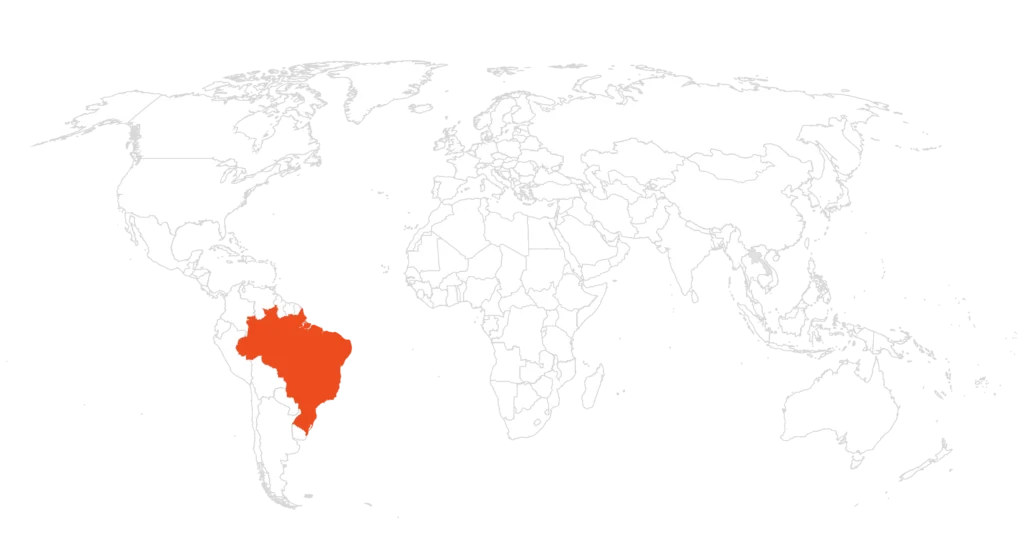
Brazil is the world's largest coffee producer and has held that position for well over a century, accounting for roughly one-third of global coffee production annually. Unlike most other major origins, Brazilian coffee is grown across vast, relatively flat or gently rolling terrain rather than steep mountain slopes, and at more moderate altitudes. This geography, combined with the scale of production, has driven a distinctly mechanised and efficiency-focused farming model although this varies depending on the specific topography.
Farm type
Size
Typical description
Small farm
< 20 hectares (ha) of coffee
Usually family-managed, less mechanized, with simpler drying and storage infrastructure.
Medium farm
20–50 ha of coffee
More structured operation, often family-owned but with hired labor and better post-harvest capacity.
Large farm / estate
Over 50 ha of coffee
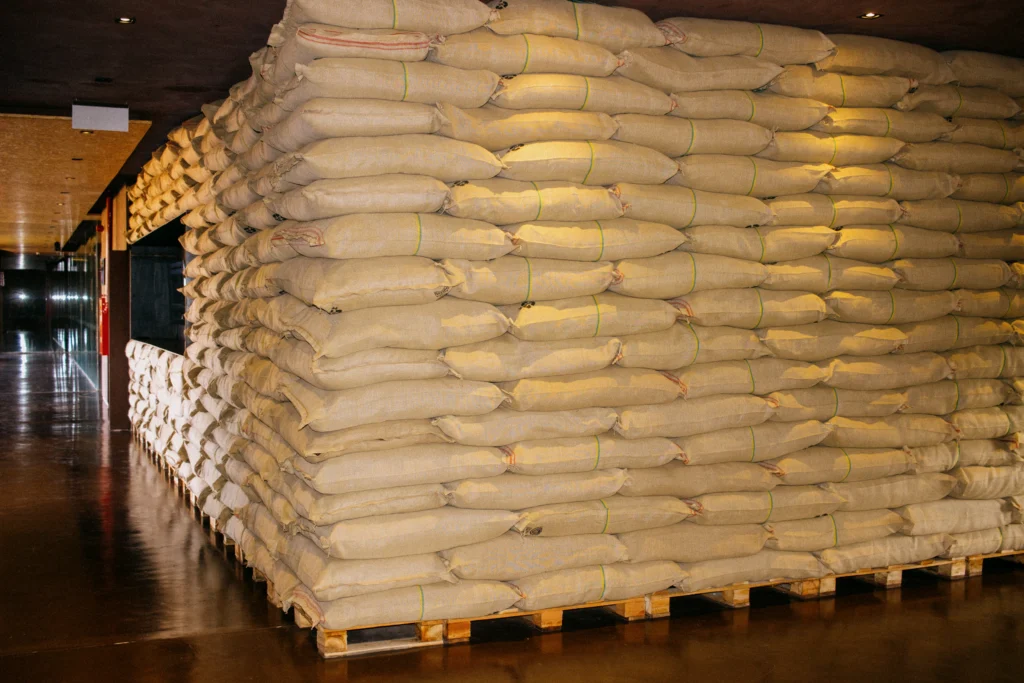
Larger planted area, more formal management teams, greater potential for mechanization, controlled drying, storage, and lot separation.
Brazil's prominence in specialty coffee has grown significantly over the past two decades. Once associated primarily with commodity and espresso-base coffees, Brazil now produces a remarkable volume of high-quality naturals, pulped naturals, and increasingly experimental lots that have captured the attention of roasters worldwide. The country's warm, dry climate during harvest season makes it one of the most naturally suited origins in the world for natural and pulped natural processing — a quality that has become central to Brazil's specialty identity.
Coffee Regions of Brazil
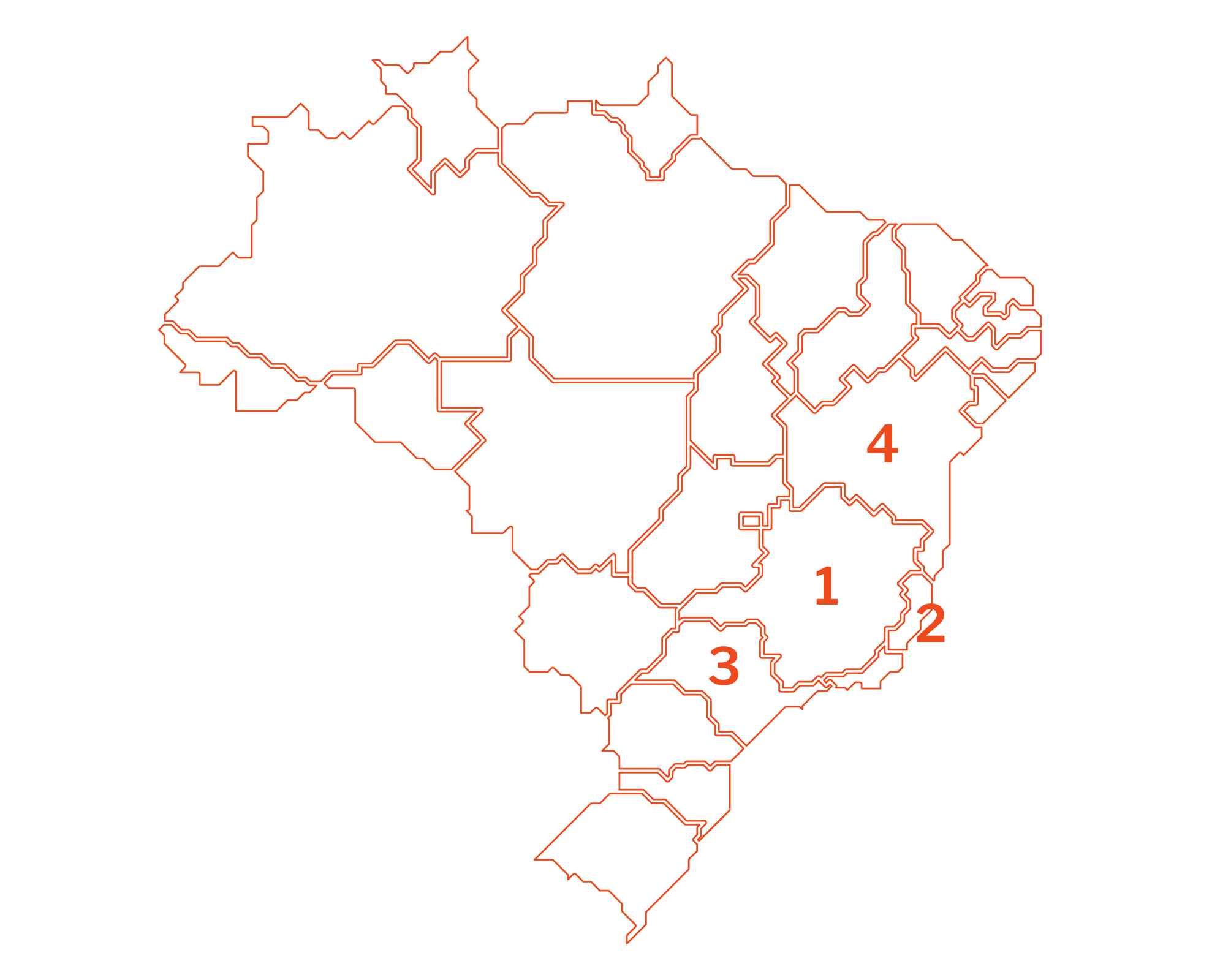
1) Minas Gerais
Sul de Minas, Chapada de Minas, Cerrado Mineiro, Matas de Minas
Minas Gerais is Brazil's most important coffee state, responsible for the majority of the country's specialty production. Sul de Minas is known for its mountainous terrain, higher altitudes (by Brazilian standards), and consistent production of well-balanced naturals and pulped naturals. Cerrado Mineiro, Brazil's first demarcated coffee region, produces clean, well-structured coffees from a plateau with a highly defined dry season ideal for natural processing. Chapada de Minas has emerged as one of Brazil's most exciting terroirs — high altitude, dramatic landscape, and exceptional cup quality.
2) Espírito Santo
Brazil's second-largest producing state by volume, Espírito Santo is the dominant origin for Conilon (Robusta) in Brazil but also has meaningful arabica production, particularly in the cooler, higher southern zones around the Montanhas do Espírito Santo designation.
3) São Paulo
Mogiana, Centro-Oeste
The Mogiana region straddles the border of São Paulo and Minas Gerais and has a long history of quality coffee production. Coffees here tend to be smooth and approachable, with good sweetness and lower acidity — well suited to espresso blending and straight natural processing.
4) Bahia
Chapada Diamantina, Planalto
Bahia has attracted significant specialty interest for its high-altitude lots from Chapada Diamantina, which can rival the complexity and clarity of highland East African coffees. The region is still relatively young in terms of specialty infrastructure but is developing quickly.
Annual Production
~3–3.5 million MT (world’s largest producer)
Average Farm Size
Varies widely — from smallholder (< 10 ha) to large estates (100+ ha)
Harvest Altitudes
700 – 1,300 meters (higher in Chapada Diamantina, up to ~1,600m)
Harvest Season
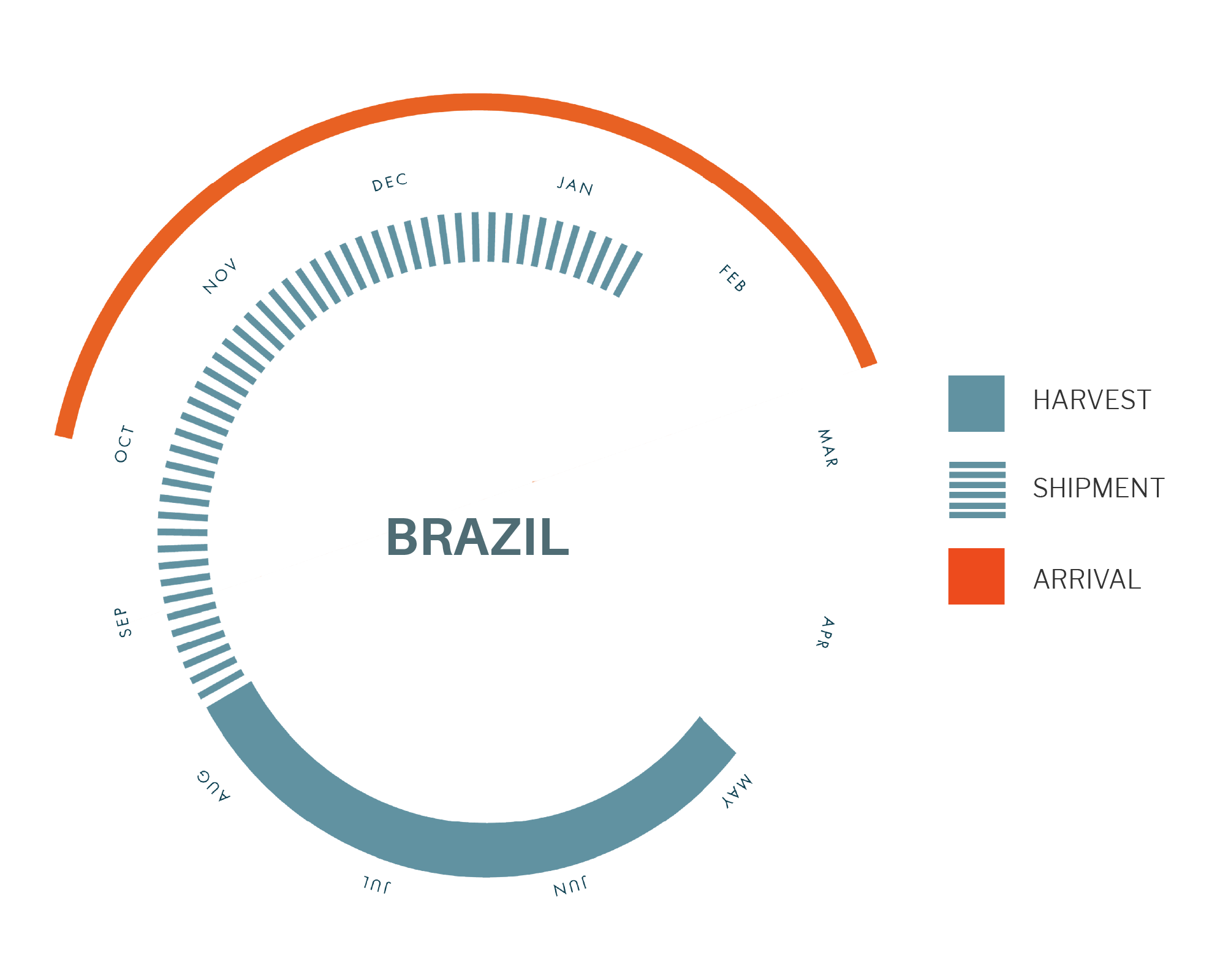
May – September (single annual harvest, no fly crop)
Ports for Shipment
Santos, Vitória
Traditional Flavor Notes & Quality Overview
Dark chocolate, hazelnut, brown sugar, low acidity, full body, nutty sweetness
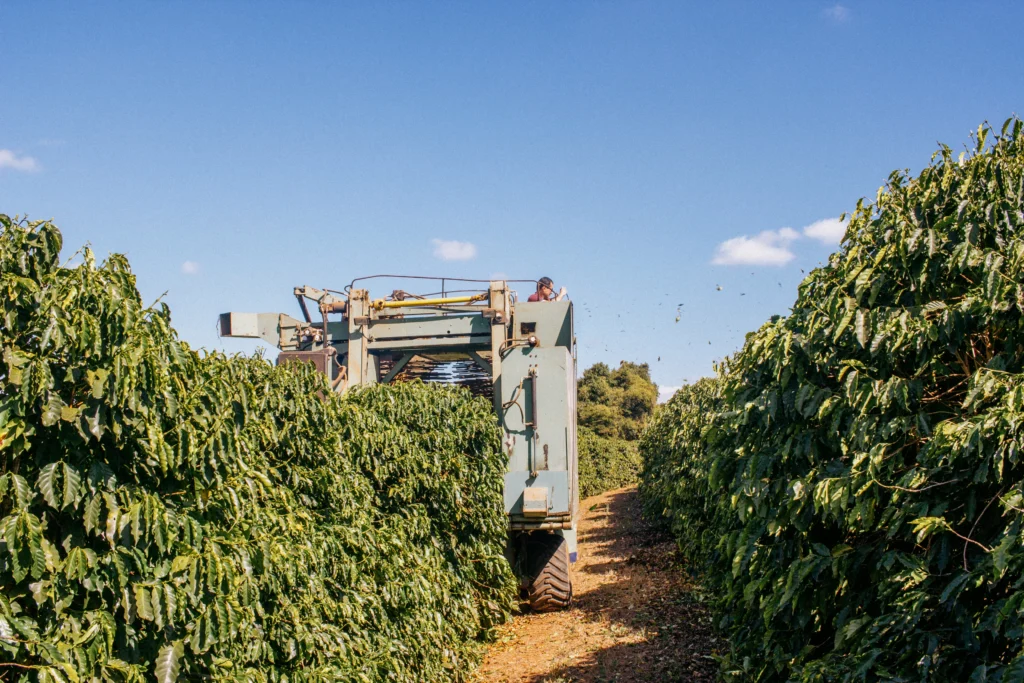
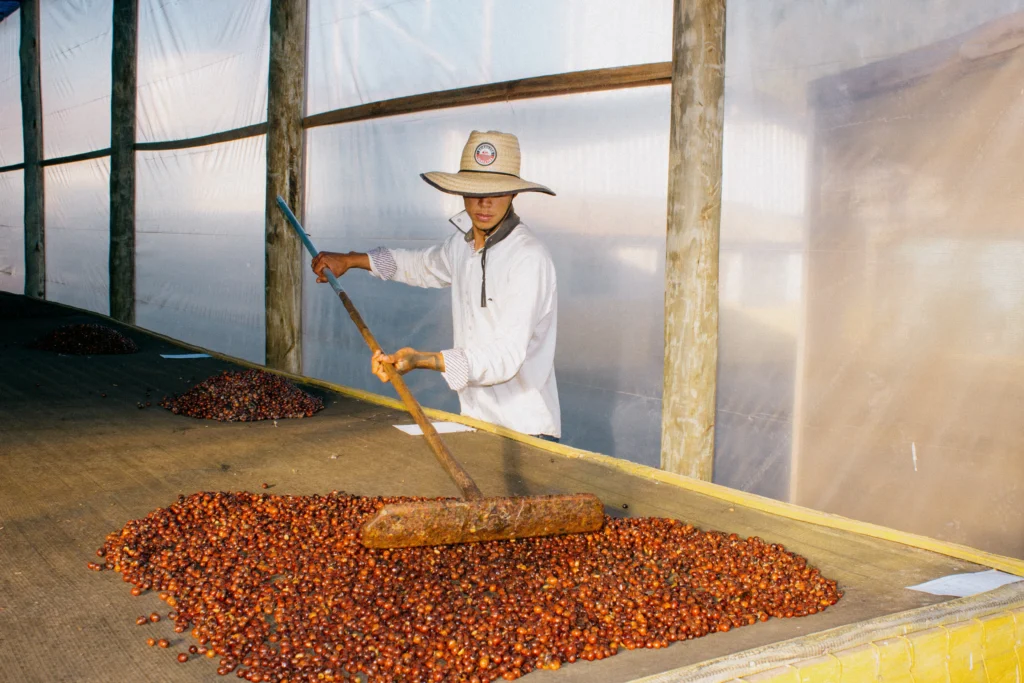
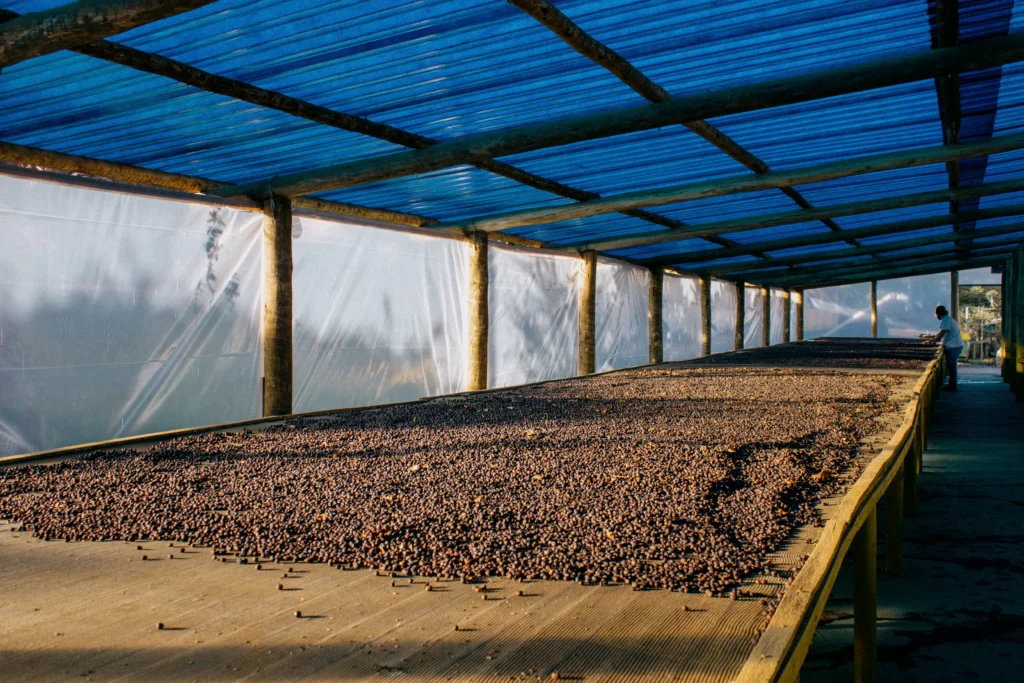
Brazil's dry, predictable harvest-season climate makes it one of the world's premier origins for natural (dry) processing, and naturals have become the defining processing method for Brazilian specialty coffee. The process takes advantage of Brazil's warm temperatures and low humidity during harvest months — cherry is harvested (often mechanically via strip-picking or mechanical strippers), sorted, and spread to dry as whole fruit on large patios or raised beds. The extended contact between the drying fruit and the seed imparts the characteristic sweetness, body, and fruit-forward character that Brazilian naturals are known for.
Pulped natural (also called honey process) is also widely practiced in Brazil and represents a middle ground — cherry is depulped but the mucilage is left on during drying, producing a cup with the clean structure of a washed coffee and the sweetness and body of a natural.
Fully washed coffees are produced in Brazil but represent a small fraction of specialty-focused output. Brazil is also now producing larger volumes of anaerobic naturals and experimental processes in response to growing demand.
Typical Natural Process Flow:
Cherry harvested (mechanical strip or selective picking)
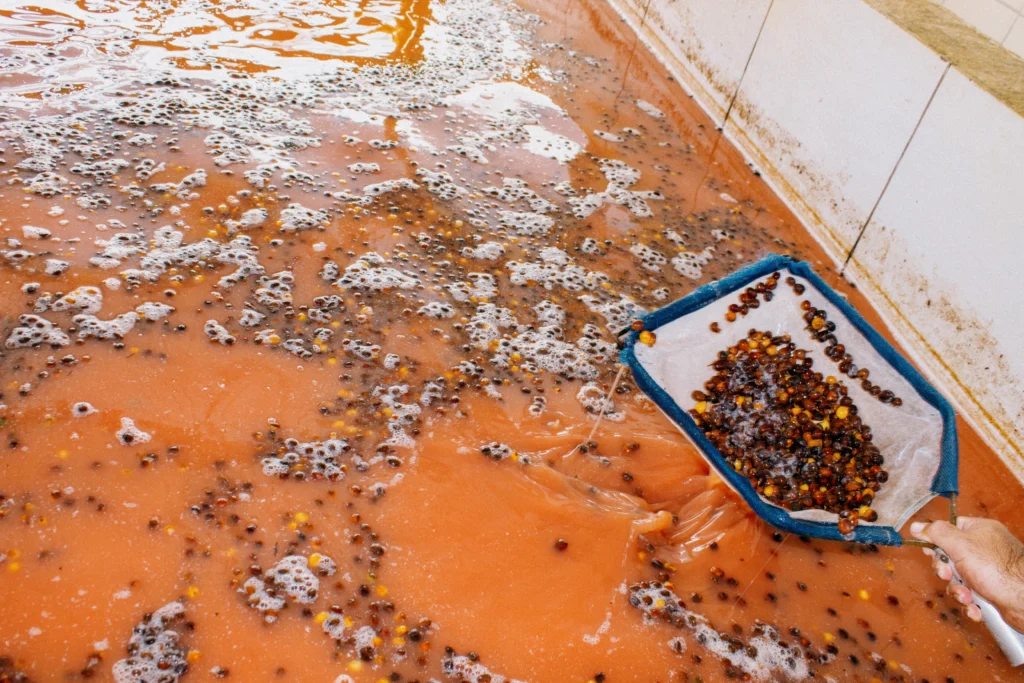
Sorting and flotation to remove underripes and defects
Spreading on patio or raised beds as whole fruit
Drying (20–40 days depending on weather and lot size)
We use cookies to ensure that we give you the best experience on our website. If you continue to use this site we will assume that you are happy with it.