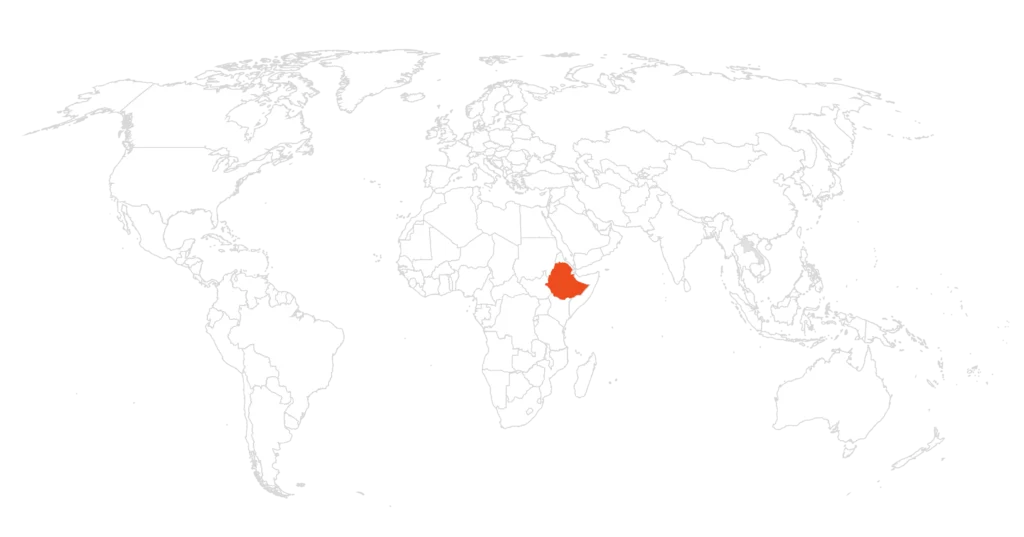
Ethiopia is the birthplace of coffee, specifically Coffea arabica. While the goat/coffee story took place in Kaffa there is debate between the regions of Kaffa and Jimma for where coffee actually originated with locals from both regions claiming coffee birth rights as a source of pride.
Ethiopia is one of the oldest countries in Africa and has its second largest population. Ethiopia is the fifth largest producer of coffee in the world producing 11-12 million 60kg bags annually. Coffee consumption is intrinsically linked to Ethiopian culture and has increased dramatically over the years to around 5 million 60kg bags.
There are 5.9 million coffee farmers in Ethiopia with roughly 90% of the country's production produced by small holder farmers averaging ½ hectare.
In 2008 the ECX was created to protect farmers from exploitation. The ECX is a centralised auction platform which pooled lots for grades and quality but were only traceable to region and grade. Only Unions and COOPS were able to export directly maintaining their traceability for certifications.
The Ethiopian Coffee and Tea Authority (ECTA) was re-established in December 2015. It was created under the mandate of the Ethiopian Council of Ministers, pursuant to Declaration No. 364/2008, and operates within the framework of the Ministry of Agriculture. The Authority is entrusted with supporting, guiding, protecting, and advancing the development of Ethiopia’s coffee, tea, and spice industries. Its mission is to foster innovation, ensure industrial excellence, and uphold the value of the country’s unique natural resources.
Since its establishment, the supply chain has expanded and diversified. In addition to traditional channels, it now incorporates smallholder farmers, organized farmer groups, and vertically integrated washing stations. This broader network strengthens the industry’s resilience and enhances Ethiopia’s position as a global leader in coffee and tea production.
In 2017 the vertical integration reforms were introduced which allowed private exporters/farmers to maintain traceability to their sites and begin to market their coffees more specifically.
Jimma Agricultural Research Center was founded in 1967 and is the central national lab coordinating Ethiopia’s coffee breeding programs. They have released over 50 disease resistant high yielding varieties such as 74112 and 74158.
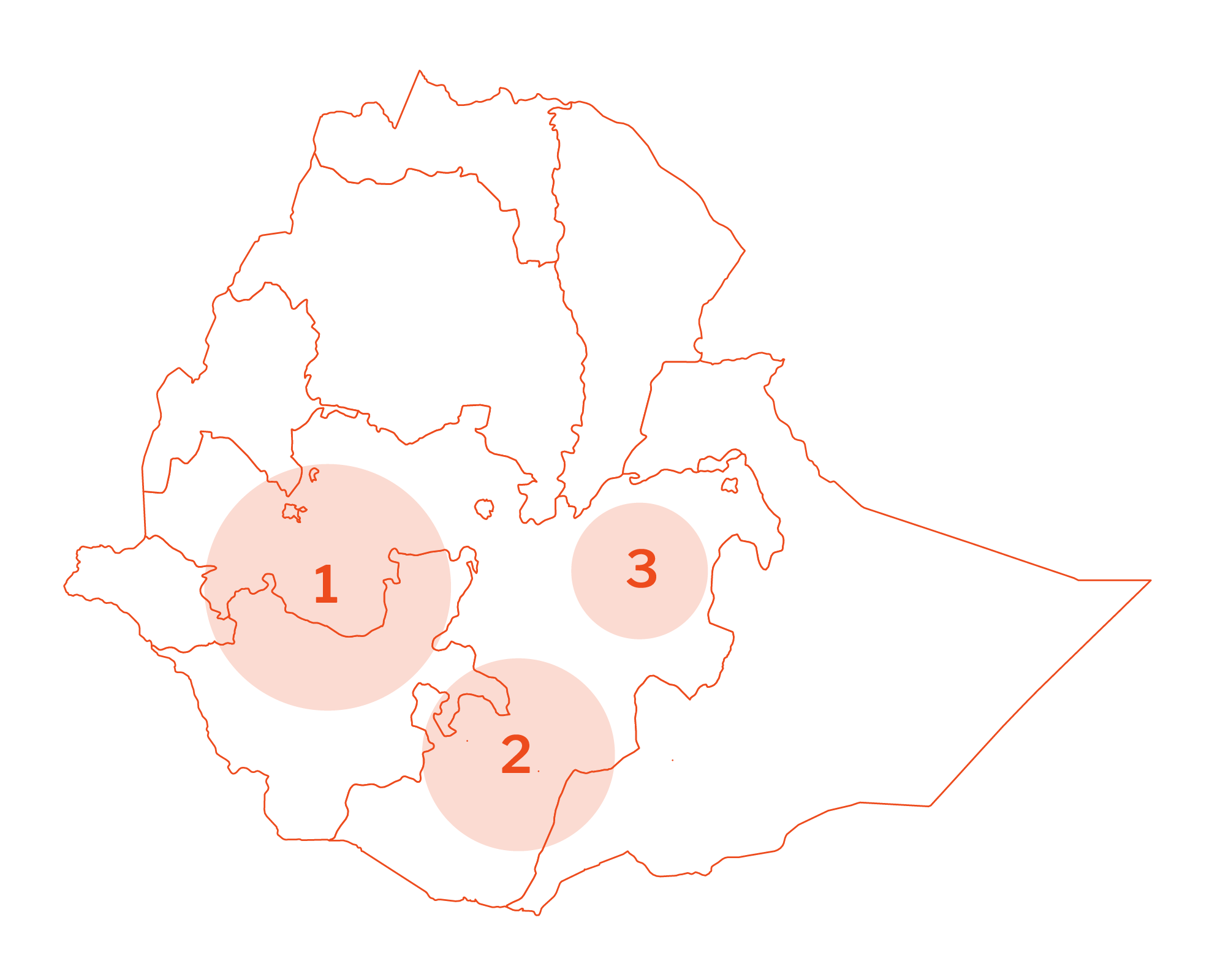
Coffee Regions of ETHIOPIA
1) Southwestern Ethiopia
Limu/Jimma While Limu is not an official coffee zone it was adopted by the ECX for a washed coffee flavor with smooth clean coffee mild citric acidity. Jimma is an official coffee zone and the birthplace of coffee. Coffees produced in Jimma are mostly natural with elevation ranges between 1400-2000 MASL.
Tepi produces mostly natural processed coffees at an elevation range of 1000-2000 MASL. It has highly fertile soil besides coffee turmeric, cardamom, ginger and many fruits that are grown in this region.
Bebeka Bebeka coffee is grown at 1000-1350 MASL and mostly sold as naturally processed coffee.
Kaffa much of the coffee from this region is still grown in coffee forests under shade. Elevation ranges from 1400-2000 MASL. Much of the production from this region is comprised of Heirloom and landrace varieties.
Wollega grown at elevations of 1600 to 2400 MASL Wollega coffees are predominantly processed as naturals. Coffees from this region are often sold as Lekemti or Lekempt coffee.
Lekempt Lekempti grown at elevations of 1500-2100 MASL are predominantly produced as naturals. Much of the production from this region is comprised form Heirloom and landrace varieties.
2) Southern Ethiopia
North Central Andes
Sidamo is the largest coffee-growing region in the country. With rich soil and altitudes ranging from 1400-2450MASL. Traditionally Sidamo produces both washed and natural coffees.
Yirgacheffe is part of the Gedeo Zone. With rich deep iron rich red volcanic soil and altitudes ranging from 1700-2300 MASL. Traditionally Yirgacheffe produces both washed and natural coffees.
Guji Once classified as Sidamo Guji began to be sought after for its unique deep berry naturals that differ from Sidamo in profile. Elevation ranges between 1700-2500 MASL. Varieties include 74110, 74112 and heirloom.
3) Eastern Ethiopia
Harrar Grown predominantly on small holder farms at elevations ranging from 1200-2100 MASL. Varieties are mostly heirloom with designations such as long berry and short berry.
Annual Production
96,000 MT 12,000,000 (60kg bags)
Average Farm Size
< 0.5 hectare
Harvest Altitudes
1000 – 2600 MASL
Ports for Shipment
Djibouti City, Djibouti
Traditional Flavor Notes & Quality Overview
Black Tea Lemon, Orange Floral Blackberry Peach Nectarine Blueberry
Common Coffee Varieties
JARC varieties 74110,74112,74158, Heirloom and Landrace varieties
Washed, Natural, Honey, Anaerobic Washed and Natural
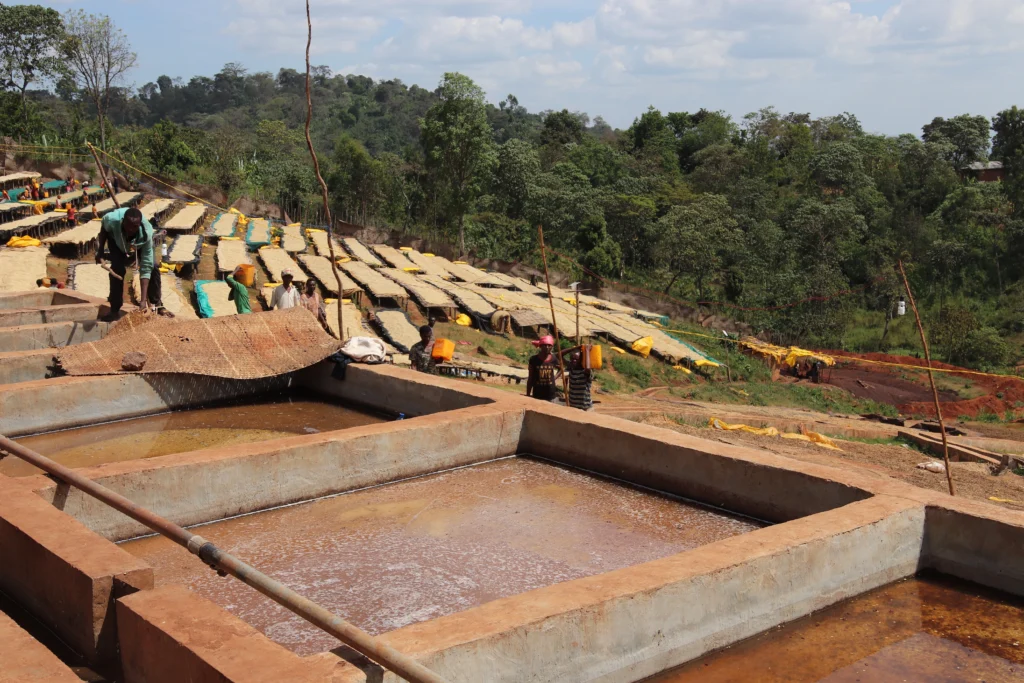
Ethiopia has long produced washed coffees and natural coffees; with small farm sizes most processing is done at sites or wet mills. There are many different techniques to producing washed coffees in Ethiopia. Some wet mills still prefer to use local made disk pulpers and long fermentation times while other wet mills use Penagos demucilagers and short or no tank fermentation. Drying and conditioning techniques can vary from region to region as well.
Washed Coffee:
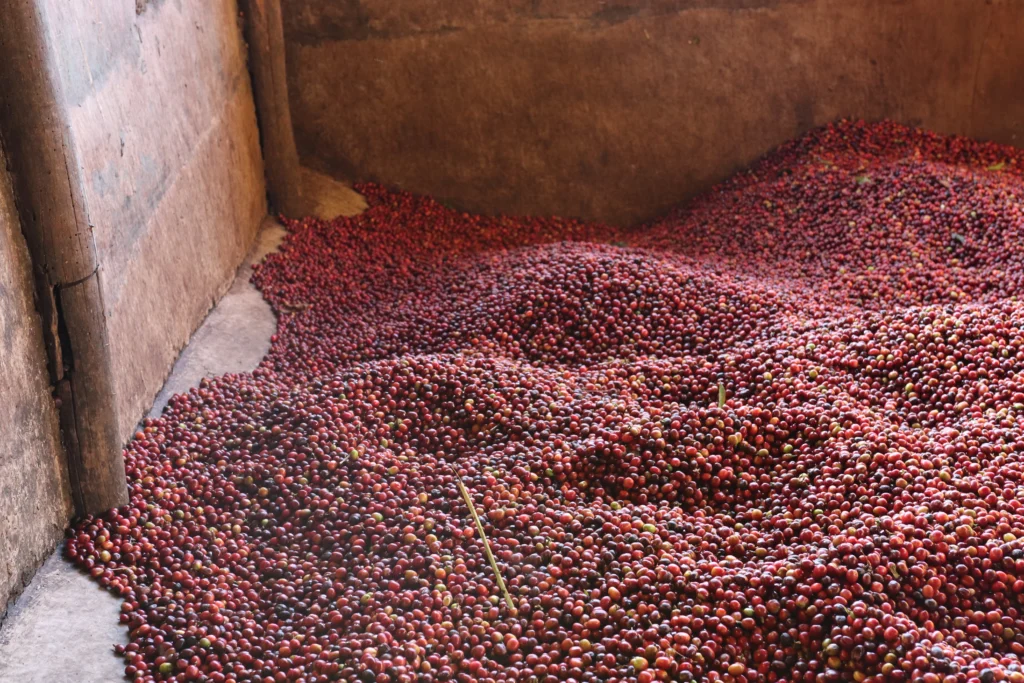
Cherry aggregated at a wet mill
Pulping washed coffees
Wet fermentation although dry fermentation is becoming more popular ranging from 12 hours to 50 hours depending on temperature.
Soaking for 6-24 hours. Many demucilaged coffees are not soaked.
Covered Drying (Skin drying) 12-24 hours.
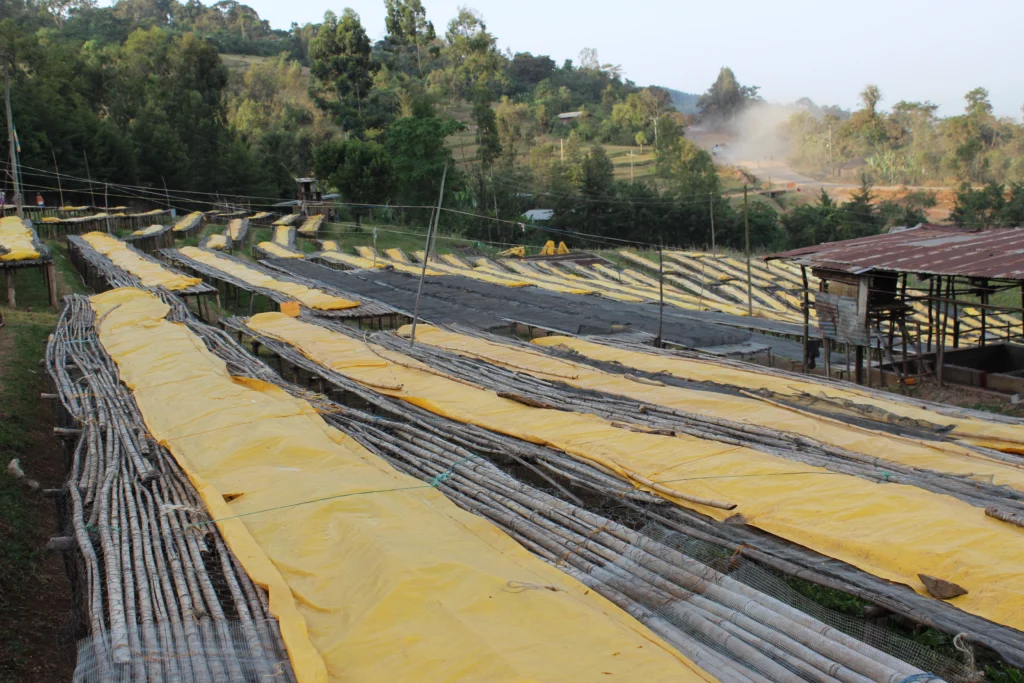
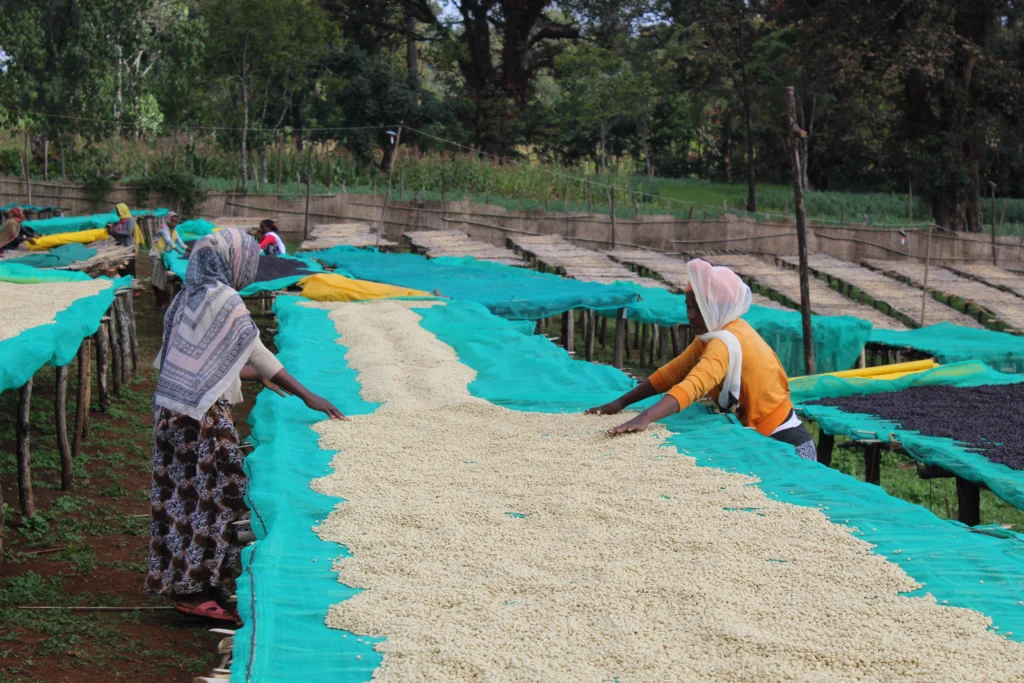
Drying on Raised Beds Protected from the heat of the day by being covered from 11-3pm. Drying time depends on elevation and location. Range is 8-15 days.
Conditioning of coffee mounded in warehouses on tarps for 3-7 days and turned daily, commonly done in Yirgacheffe and Guji
Transported to Dry Mill for export preparation
Natural Coffee:
Cherry aggregated at a wet mill
Some sites float cherry to remove light bean.
Coffees put on raised beds. Protected from the heat of the day by being covered from 11-3pm. Drying depends on elevation and location. Range is 11-30 days.
Conditioning of coffee mounded in warehouses on tarps for 3-7 days and turned daily, becoming less common for natural these days done in Yirgacheffe and Guji
Many sites now have rudimentary dry milling equipment to debulk the coffees (remove cherry husk) for transport.
We use cookies to ensure that we give you the best experience on our website. If you continue to use this site we will assume that you are happy with it.