Coffee was brought to Mexico in the late 1700s from the Antilles archipelago (Cuba, Dominican Republic, Jamaica, Puerto Rico etc). These plants were Typica variety and originally planted in Veracruz. Bourbon was introduced not long after to Mexico.
Production spread to Chiapas, Puebla and Oaxaca where together with Veracruz 90% of all Mexican coffee is grown. In 1973 the government formed INMECAFE or Institute of Mexican Coffee which served to support farmers financially and technically. INMECAFE was responsible for a 900% growth of Mexican coffee production through the 1980s working to level the playing field between small farmers and large commercial estates. INMECAFE closed in 1989 when the government stopped funding.
Between 2012 and 2015 Mexico was devastated by La Roya or leaf rust. By 2015 some regions had lost 75% of their production and national production went from historically 6 million bags to 2.8 million.
The average farm size in Mexico is 2.9 hectares, the average age of a farmer in Mexico is 54. There are 545,000 coffee farmers in Mexico working on 712,000 hectares.
Coffee Regions of Mexico
1) Chiapas
Soconusco, Sierra Madre, and the highlands
Chiapas is the largest coffee producing state/region in Mexico. This region has volcanic soil, ample rainfall and altitude range between 1200-1800 MASL and many microclimates with heavy forest canopies. Most of Chiapas production is centred on the Sierra Madre de Chiapas mountain range.
2) Oaxaca
Pluma Hidalgo, Sierra Sur, Sierra Norte, and Sierra Mazateca
Oaxaca is Mexico’s third largest coffee producing region. Most of the production is comprised of small-scale farmers. The region is closely associated with older arabica genetics, including Typica, Bourbon, and Pluma Hidalgo. Oaxaca’s coffee is grown between 1000-1750 MASL and has volcanic soil.
3) Veracruz
Coatepec, Huatusco, Zongolica, and Cosautlán
Veracruz is Mexico’s second largest coffee producing state/region. It has many microclimates and produces a wide range of coffee flavours. The soil is volcanic and much of the coffee is grown under some shade. Elevation in Veracruz is between 1000-1800 MASL. Veracruz has a mix of large estates and smallholders.
4) Puebla, Guerrero, Hidalgo, Nayarit, and other highland pockets
Puebla has elevations of 1200-1800 MASL and much of the coffee is grown under shade in volcanic soil. Many of the communities are very isolated in Puebla and thus have fewer options for who to sell their coffees to. However, as Puebla’s reputation for quality increases more people are buying from these communities.
Mexico highlights
Production structure
With an average farm size of 2.9 hectares smallholders produce the majority of Mexico’s production. Mexico is the second largest producer of certified organic coffee in the world behind Peru, the majority of which is produced by smallholder cooperatives.
Harvest timing
Harvest generally runs from November to March depending on region and altitude.
Common cultivars
Typica, Bourbon, Caturra, Mundo Novo, Catuaí, Maragogype, Garnica, Catimor, Marsellesa, Oro Azteca, Costa Rica 95, Pluma Hidalgo
Veracruz and Manzanillo are important export routes, with some coffee also moving overland or by rail depending on buyer, destination, and exporter logistics.
Primary processing identity
Washed
Primary Processing Focus — Washed
Mexico is predominantly a washed-coffee origin. Natural, honey, anaerobic, and extended-fermentation coffees are growing in volume for specialty buyers.
A representative Mexican washed process usually looks something like this:
Selective cherry picking
Sorting to remove underripe, overripe, or lower-density cherry (Penagos floating attachment)
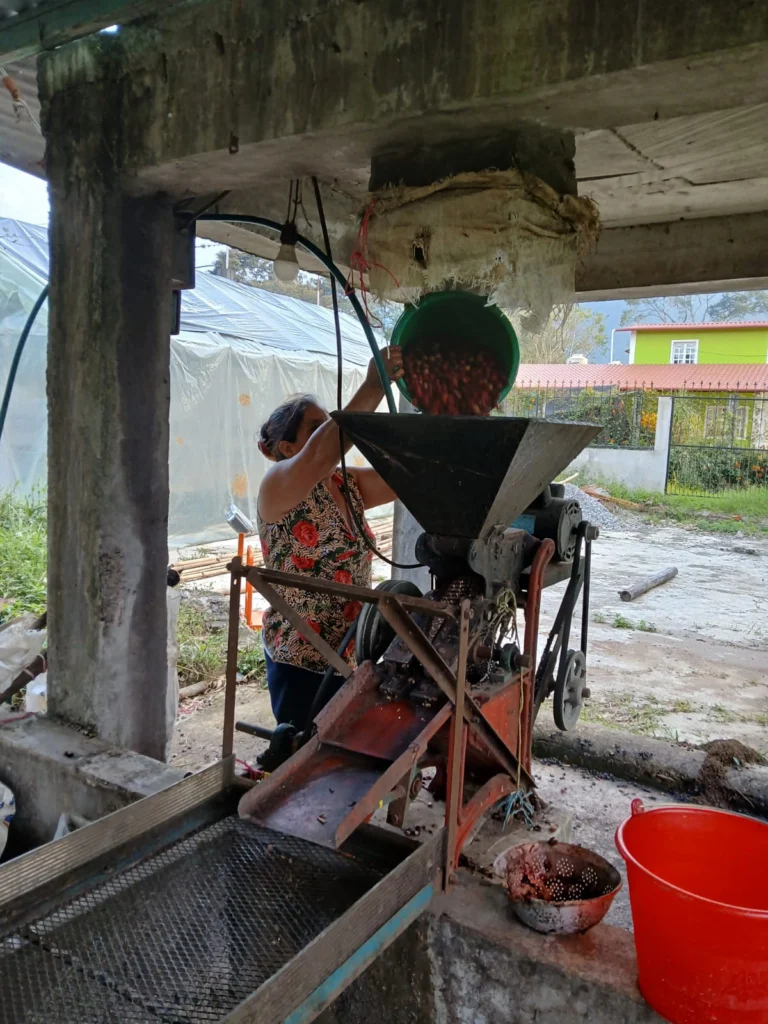
Pulping at farm level, through a producer group, or collected by aggregators and brought to a larger mill using small hand pulpers, gas powered pulpers, large traditional disc pulpers and modern demucilagers.
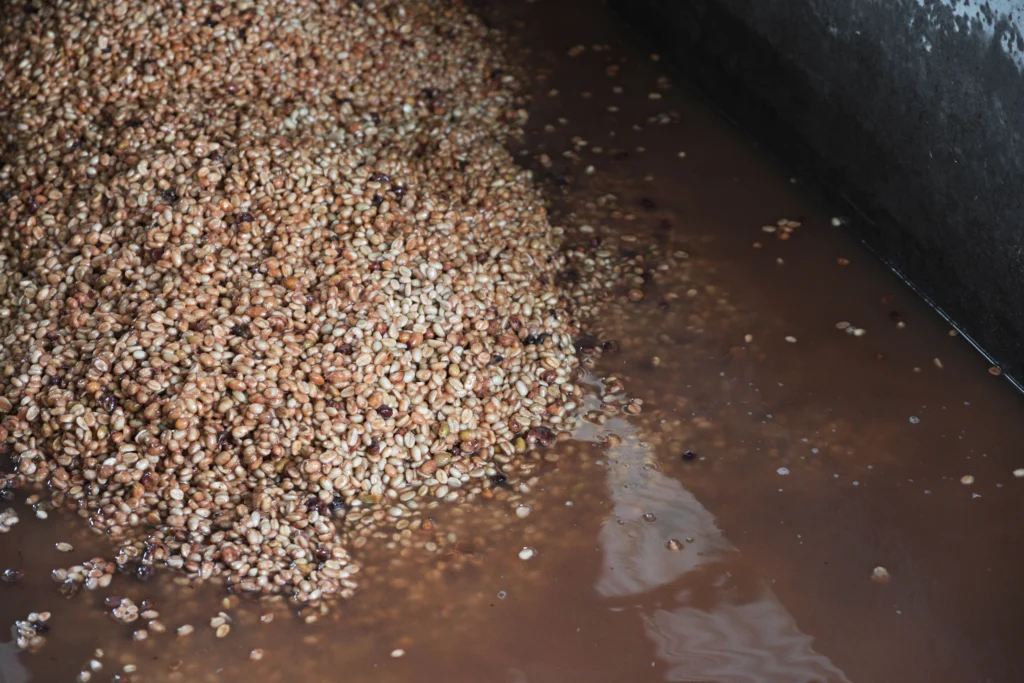
Fermented dry in tanks or barrels 12-40 hours depending on temperature and desired profile.
Washing to remove remaining mucilage.
Drying on patios, raised beds, rooftops, mechanical dryers average drying time is 6-12 days.
Final sorting and lot separation according to quality, screen size, certification, process, and buyer requirements.
We use cookies to ensure that we give you the best experience on our website. If you continue to use this site we will assume that you are happy with it.