Nicaragua is Central America's largest country by land area, and coffee has been one of its most important agricultural exports for well over a century. Production is concentrated in the northern highlands where cooler temperatures, reliable rainfall, and fertile volcanic soils create excellent conditions for arabica cultivation. The majority of Nicaraguan coffee is grown by smallholder producers who complete their own processing at the farm level, pulping and fermenting cherry before delivering wet parchment to the dry mill.
What makes Nicaragua's northern highlands so well suited to coffee is as much about the push and pull of competing weather systems as it is about altitude and soil. The country sits at a meteorological crossroads, moisture laden trade winds rolling in from the Caribbean to the east collide with the drier, more seasonal influence of the Pacific to the west, and the mountains of the northern interior catch and mediate both.
The result is a pattern of well distributed rainfall during the growing season and a dry period reliable enough for patio drying at harvest time, a combination that is genuinely difficult to find and easy to undervalue. Beneath the trees, the soils tell their own story. The northern highlands sit on some of Central America's most geologically active terrain, and centuries of volcanic activity have left behind deep, mineral rich earth with excellent drainage and a natural fertility that reduces dependence on inputs and expresses itself in the cup. In the higher zones of Nueva Segovia and Jinotega in particular, this volcanic base is often layered with organic matter accumulated under shade canopies that many producers have maintained for generations, adding further complexity to soils that are already among the most naturally generous in the region.
Nicaragua entered the specialty coffee conversation more gradually than some of its Central American neighbors, but over the past fifteen years the country has established a clear identity for producing clean, well structured coffees with good sweetness and a price to quality ratio that has made it a consistent choice for specialty roasters.
Investment in processing knowledge and equipment at the farm level has been a meaningful driver of this quality improvement, and the country's best producers have developed a level of processing discipline that shows clearly in the cup. The highest altitude growing areas in the north, particularly Nueva Segovia and Jinotega, consistently produce lots that compete with the finest coffees in the region. Nicaragua also remains one of the more accessible Central American origins for direct trade relationships given the producer led processing model and the well developed dry mill infrastructure in the main growing departments.
Coffee Regions of Nicaragua
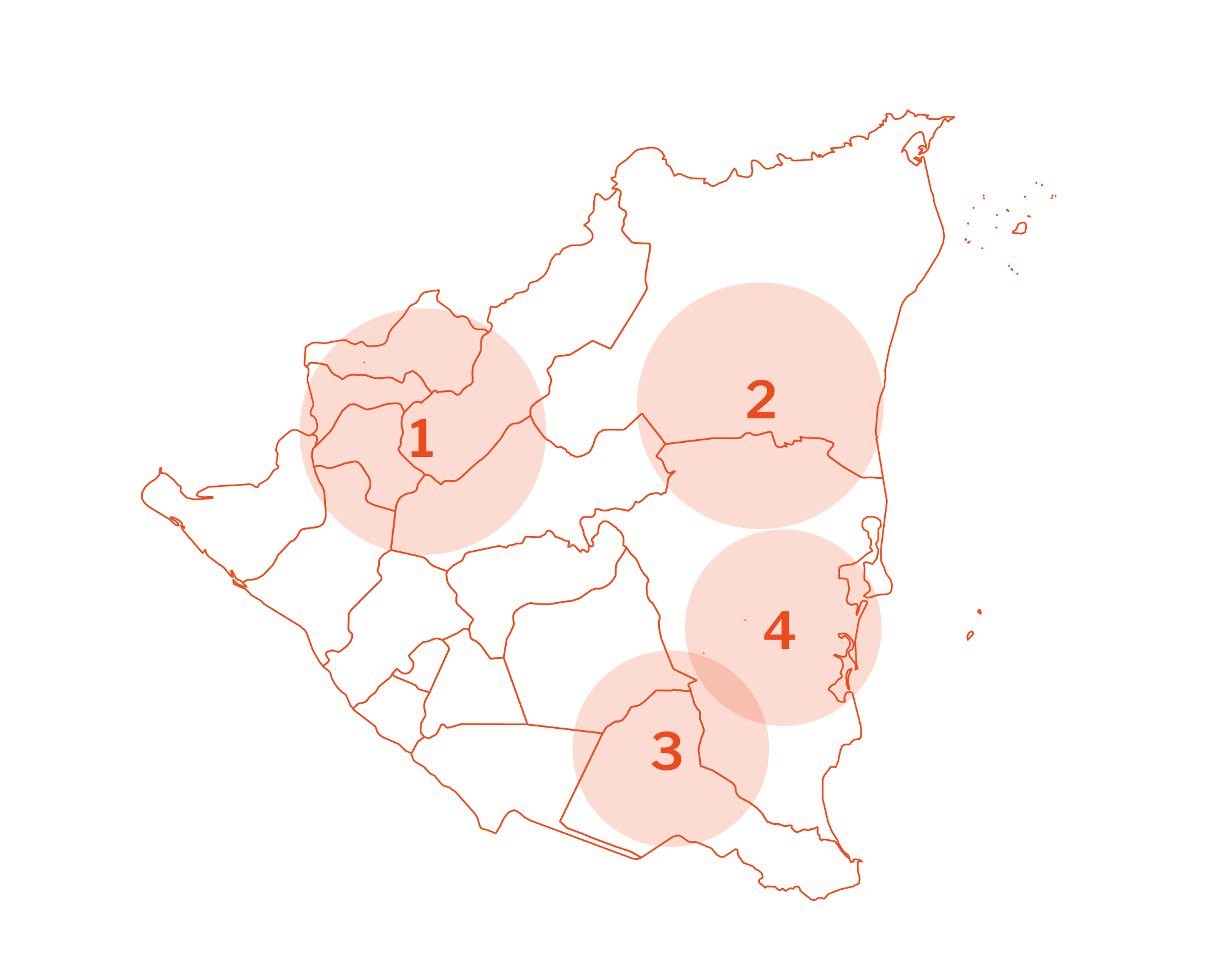
1) Nueva Segovia
Northern Highlands, bordering Honduras
Nueva Segovia is Nicaragua's most celebrated specialty department and the source of some of the country's finest microlots. The region sits at the highest altitudes in Nicaragua, with many farms cultivating above 1,400 meters in areas like Mozonte, Jalapa, and Dipilto. The combination of altitude, cool nights, and well drained soils produces coffees with bright acidity, clean sweetness, and a complexity that sets them apart from lower grown Nicaraguan lots. The region has a strong culture of farm level processing and produces some of the most traceable and distinctive coffees in all of Central America.
2) Jinotega
North Central Highlands
Jinotega is Nicaragua's largest coffee producing department by volume and alongside Nueva Segovia anchors the country's specialty production. The region is home to a mix of smallholder plots and larger estates, many cultivating between 1,100 and 1,500 meters. Jinotega coffees tend to be well balanced with good body, clean sweetness, and a reliability that has made the department a cornerstone of Nicaraguan specialty exports. The region also sees a growing range of processing experimentation including honey and natural lots from producers with the infrastructure to execute them well.
3) Matagalpa
North Central
Matagalpa sits just south of Jinotega and shares much of the same general growing character, though at somewhat lower and more variable altitudes. The department has a long history of coffee production and contributes significant volume to Nicaragua's overall output. There are strong pockets of quality production in the higher elevation zones and Matagalpa remains an important part of Nicaragua's specialty story.
4) Estelí
Northern Highlands
Estelí is better known internationally as a tobacco growing region but produces coffee at altitude in its eastern rural areas. Cup quality in the higher elevation zones can be very good and the region offers interesting options for buyers looking to work outside the more established departments. Production volumes are smaller than the other main growing departments but the coffees tend to have a clean, distinct character worth seeking out.
Annual Production
Approximately 120,000 to 150,000 MT
Average Farm Size
< 7 hectares (70% of producers < 3 hectares)
Harvest Altitudes
900 to 1,600 meters
Harvest Season
November to March
Ports for Shipment
Corinto
Traditional Flavor Notes & Quality Overview
Milk chocolate, roasted almonds, caramel and brown sugar sweetness, stone fruit, bright and gentle citrus acidity, smooth and balanced medium to full body.
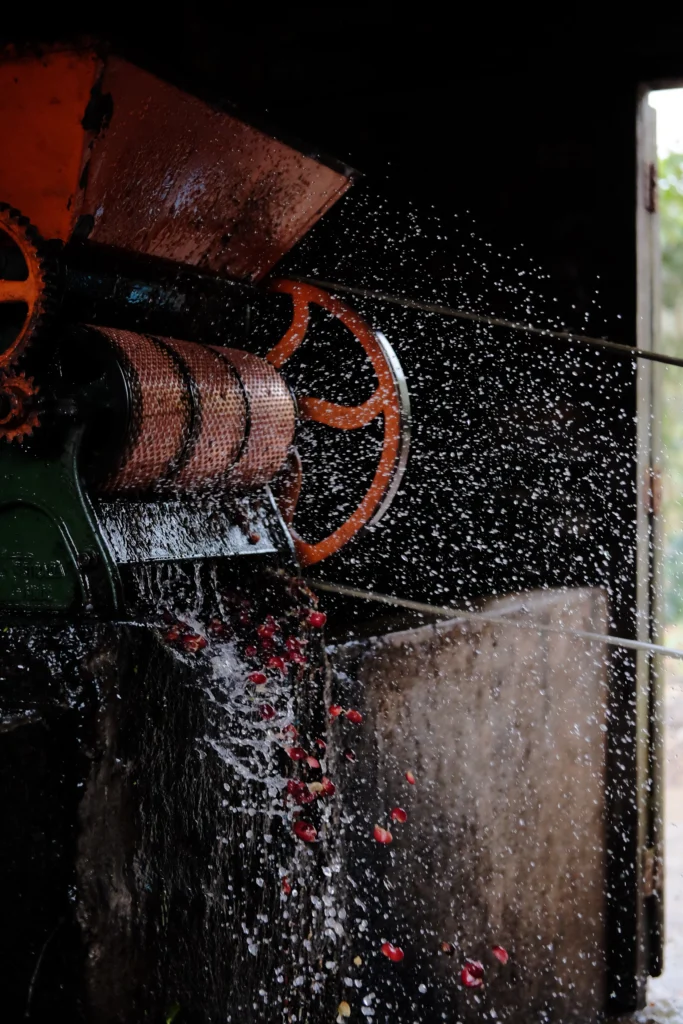
Nicaragua produces predominantly washed coffees, and the fully washed process defines the clean, balanced cup profiles the country is best known for. Most producers in Nicaragua process their own coffee at the farm level, pulping and fermenting cherry before delivering wet parchment to the dry mill. After fermentation, coffee is washed and dried predominantly on patios, the traditional and most common drying method across Nicaragua's growing regions. This farm level processing model is one of Nicaragua's defining characteristics as an origin, supporting traceability and direct relationships between buyers and individual producers.
Also available in smaller quantities from Nicaragua are honey and natural processed lots, primarily from producers in the higher altitude departments who have developed the knowledge and infrastructure to execute these processes with consistency.
Typical Natural Process Flow:
Cherry pulped and fermented at farm level
Washing after fermentation
Delivery of wet parchment to dry mill / also cases of cherry delivery
Drying on patios (12 to 18 days depending on conditions) or raised beds for specialty lots
We use cookies to ensure that we give you the best experience on our website. If you continue to use this site we will assume that you are happy with it.