

A 2-year technical assistance initiative focused on improving specialty coffee production in Northern Peru. By providing training, soil analysis, and access to quality-improving equipment, the project supports smallholder farmers to enhance their coffee quality, increase yields, and improve farm sustainability.
Origin: Peru (Cajamarca)
Timeline: 2024-2026
Partner orgs: Falcon Coffees, responsAbility Climate Smart Agriculture & Food Systems Fund, Siruma Coffee
THE OPPORTUNITY
The specialty coffee market offers significant value opportunities for smallholder farmers in Peru, yet many lack access to the technical assistance, tools, and financial resources to meet specialty-grade requirements. Inconsistent quality, disease pressures, and market fluctuations further challenge their ability to secure stable incomes.
This project, implemented in the Cajamarca region, addresses these issues by providing tailored technical assistance, focusing on post-harvest practices, fermentation methods, and the adoption of sustainable farming techniques. By improving coffee quality and optimizing processing, farmers can access higher-value markets, increasing profitability and resilience.
THE PLAN
Over the course of two years, the project will:
• Conduct soil analyses to develop tailored fertilization plans that improve productivity and soil health.
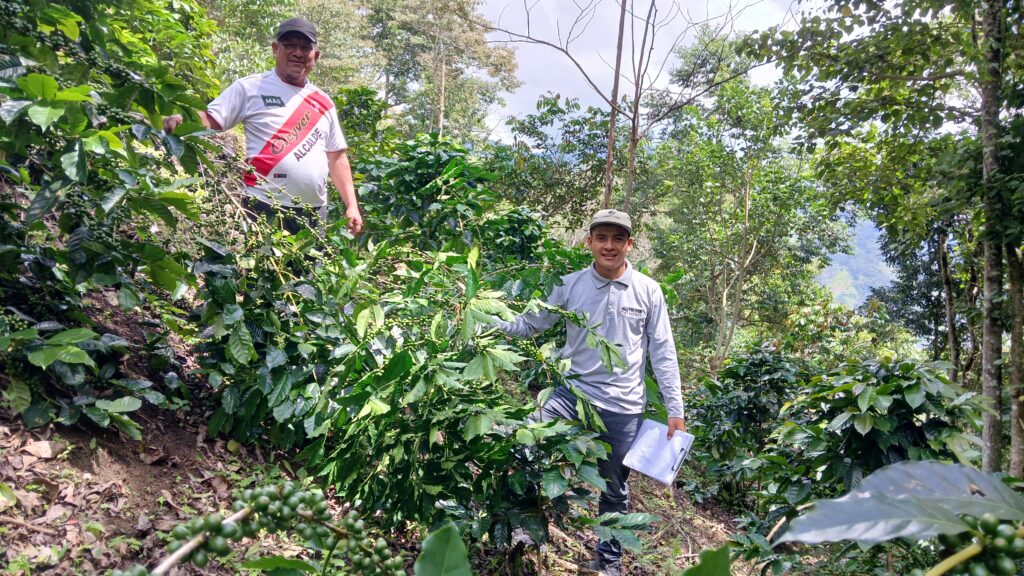
• Facilitate technical visits and demonstration plots for hands-on learning.
• Deliver equipment to enhance processing efficiency and maintain quality standards.
• Strengthen producer engagement with specialty buyers to secure better pricing and long-term commercial relationships.
THE RESULTS
As of February 10, 2025, the project has made significant progress in its first year:
• 107 producers recruited (107% of the target of year 1).
• 3 field extensionists hired and trained (100% of the target).
• Technical and methodological training materials completed (100%).
• Producer handbook developed (100%).
• 16 training workshops on harvest initiation conducted (107%).
• 20 training workshops on post-harvest processing and water management (167%).
• 22 training workshops on soil health and nutrition management (183%).
• 16 training workshops on pest and disease control (133%).
• 100 soil samples analyzed and interpreted, with fertilization plans developed (100%).
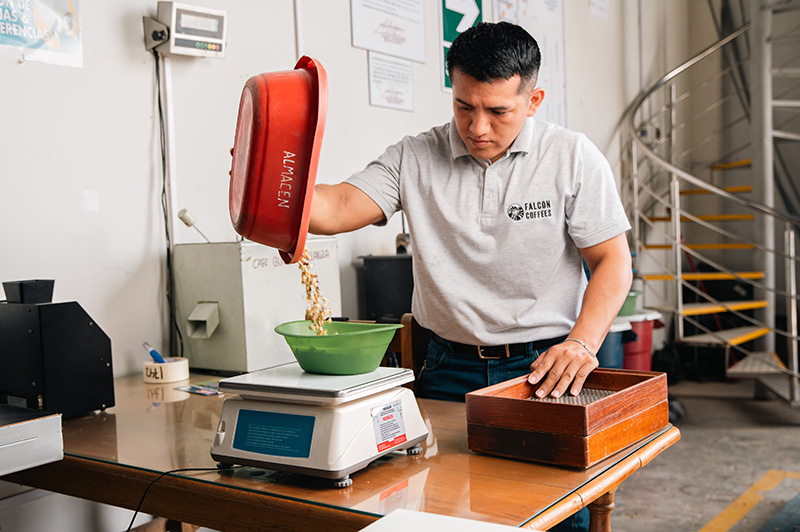
• 50 sets of essential processing equipment distributed (refractometers, cherry meters, thermo-hygrometers, anaerobic fermentation cylinders) (50% completed).
• 30 anaerobic fermentation cylinders distributed (100%).
• 426 individual technical visits completed (142%).
• 30 fermentation innovation trials conducted (100%).
THE IMPACT
While it is still early to measure definitive changes in productivity and quality, the project has laid a strong foundation for long-term impact. The first year has been dedicated to capacity building, equipping farmers with technical skills, tools, and best practices to improve their coffee production.
A key focus has been on fermentation trials, where we are closely monitoring Brix levels, fermentation time, pH, temperature, and other key indicators to assess how different processing techniques impact cup quality. Initial findings from these trials are promising, providing valuable insights into fermentation dynamics and their effect on flavor development. The data is currently under review, and a more detailed analysis will be available at the close of the first year. These findings will help refine methodologies for the next harvest cycle, ensuring that producers can apply the most effective processing techniques to enhance quality.